This is default featured slide 1 title

Go to Blogger edit html and find these sentences.Now replace these sentences with your own descriptions.

This is default featured slide 2 title

Go to Blogger edit html and find these sentences.Now replace these sentences with your own descriptions.

This is default featured slide 3 title

Go to Blogger edit html and find these sentences.Now replace these sentences with your own descriptions.

This is default featured slide 4 title

Go to Blogger edit html and find these sentences.Now replace these sentences with your own descriptions.

This is default featured slide 5 title

Go to Blogger edit html and find these sentences.Now replace these sentences with your own descriptions.

Showing posts with label Literacy and Technology. Show all posts

Sunday, 6 July 2014

The future is in their hands: Using cell phones for literacy - Free book!

Willyn Webb and I contributed to the International Society of Technology Educators (ISTE) Literacy Journal. The journal features innovative ways to enhance learning with technology. Our chapter is called, "The future is in their hands: Using cell phones for literacy learning. Unlike other journals, there is no pay wall to access the journal. It is available free!

Here is what you'll find in the journal:

Table of Contents Forward 
 Editor, Mark Gura Page 4 

 Text Meets Video in the Blogosphere: Complex Informational Content for Today’s Students 
by Dr. Rose Reissman Page 6 

 Using Creative Technology to Engage Struggling Readers and Writers as Producers of Literature 
by Melinda Kolk Page 12 

 The Future Is In Their Hands: Using Cell Phones for Literacy Learning 
by Lisa Nielsen and Willyn Webb Page 21  

 Boosting Oral Language Fluency through Technology Intensive Literature Exploration (TILE), a Learning Centers Approach 
by Kevin Amboe Page 32 

 Learning to Teach with Edmodo: Social Networking-based Activities 
by Kathy D. Shields Page 44 

 Using Online Discussions to Develop Literacy Skills and Integrate the NETs
by Sandra Wozniak Page 54 

 Student Led Podcast Projects Make Common Core Literacy skills Come Alive
by Dr. Rose Reissman Page 64 

 Using Technology To Enhance Reading Skills For English Language Learners
by Kimberly M. Thomas Page 74

Interested? You can check out the journal below.

Scribd.com Version:
http://www.scribd.com/doc/227311233/Literacy-Special-Interest-V1-Number2Read or Download as PDF (requires free registration) scribd

Wednesday, 20 November 2013

How Social Reading Enhances the #CCSS

Guest post by Travis Alber

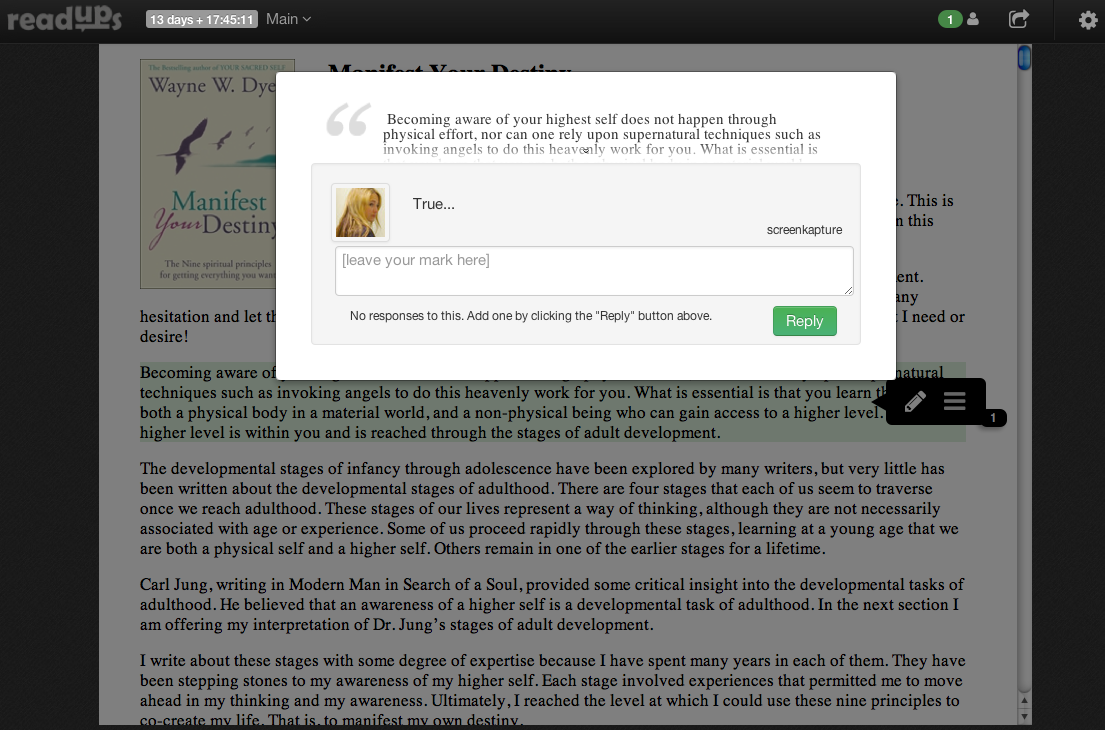
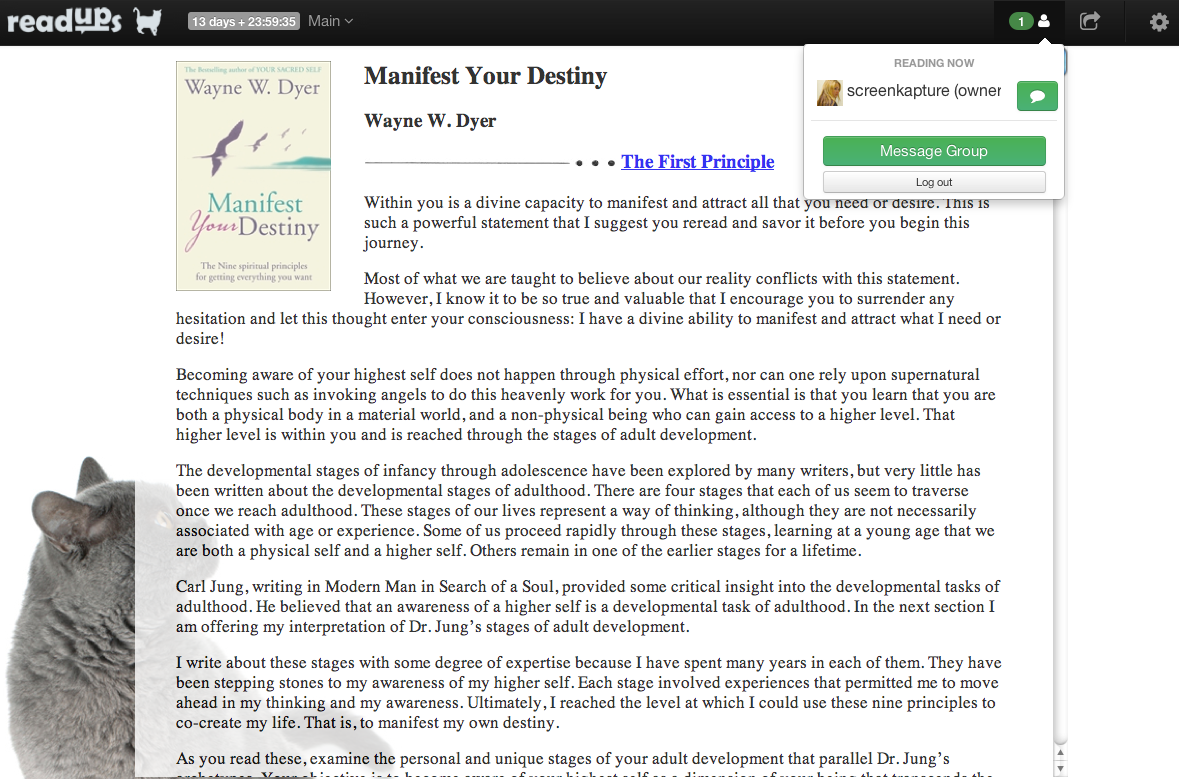
ReadUps is an online discussion platform where students can read online and discuss content inside the book. Actually, it doesn't have to be a book, it can also be an imported URL, an uploaded course packet, or whatever you paste in. But the purpose of the ReadUp is to "meet up" inside what students read, and to discuss it. Discussion features allow students to leave comments and responses on any paragraph, or message other readers in the book at the same time. When the ReadUp expires (usually within 2 months), the conversation and book disappear from the website.
ReadUps are “Meetups” inside Books
Here are some ways ReadUps can be used to implement the Common Core

1. Contextual discussion
ReadUps is great for the close reading of texts, and a good platform for students to help other students. Students attach questions to a paragraph and get multiple answers. It's like a distributed study group that meets outside of class to help students get more from their peers.

2. Detailed analysis of the work
CCSS has a focus on critical thinking. Some teachers assign a chapter to students, and sprinkle questions throughout the text, asking students to answer a requisite number. Readups provide a good way for students to demonstrate a deep understanding of the text, and to show improved comprehension when they ask questions back.

3. Focus on Feedback
ReadUps provide an effective means to engage students in their writing assignments. Students can paste content in, ask classmates to read it, and learn how to improve their work. It's not a word processing program, it's a discussion platform, so students take away suggestions at high level, learn to consolidate their thoughts, and then edit their original document in whatever other program they’ve been writing in. Since the ReadUp only lives for a short time - in fact, students can set it to expire after a day - it allows detailed, comprehensive feedback as a simple step in the writing process.


So what do you think? Is this something you might try in your classroom? Want to try it out? Join " Sherlockian Diversions," a public ReadUp in progress [http://rdup.me/hkzit1cens714i].


Travis Alber is an entrepreneur focused on publishing innovation; her latest startup, ReadUps, offers paragraph-level discussions and reading groups inside content. Based in NYC, she has been working for 15 years on a number of web, ebook, education and mobile-related projects. Reach her at  @screenkapture [http://www.twitter.com/screenkapture].

Tuesday, 19 February 2013

Five Ways to Build Lifelong Readers


Guest post by Maddie Witter

The new Common Core State Standards list skills to prepare American young people on the path toward the college and careers of their choice.  Yet as students are on their journey to and through college, and ultimately through life, I also hope they are lifelong learners with an insatiable thirst for knowledge driven by their unique passions.  It’s that self-driven desire for knowledge that will empower students to grow and reach their potential beyond the reach of our classrooms.  Building love of learning is a top priority in my classroom.

Where do lifelong learners often turn to get their knowledge? Books!  Below are five ways you can help build lifelong readers.

I want more »

Wednesday, 30 January 2013

How Kids Really Learn to Write


Patricia Zaballos shares some radical notions about how kids can become writers in her article in Life Learning Magazine. These notions share little resemblance to what writing looks like in schools today. 

Though she has extensive experience as a public school student and teacher, her insights are drawn from her fifteen years spent homeschooling her own kids and watching them become writers as well as more than a decade of facilitating writer’s workshops and the twenty years she spent becoming a writer.  

In her article Zaballos explains what kids do and don’t need to become writers.   You can read the thinking behind each do and don’t at the original article or on her blog.  Below are the highlights.

I want more »