This is default featured slide 1 title

Go to Blogger edit html and find these sentences.Now replace these sentences with your own descriptions.

This is default featured slide 2 title

Go to Blogger edit html and find these sentences.Now replace these sentences with your own descriptions.

This is default featured slide 3 title

Go to Blogger edit html and find these sentences.Now replace these sentences with your own descriptions.

This is default featured slide 4 title

Go to Blogger edit html and find these sentences.Now replace these sentences with your own descriptions.

This is default featured slide 5 title

Go to Blogger edit html and find these sentences.Now replace these sentences with your own descriptions.

Showing posts with label School Reform. Show all posts

Wednesday, 15 October 2014

Bored? Explore it!

Guest post by Michelle Loucas
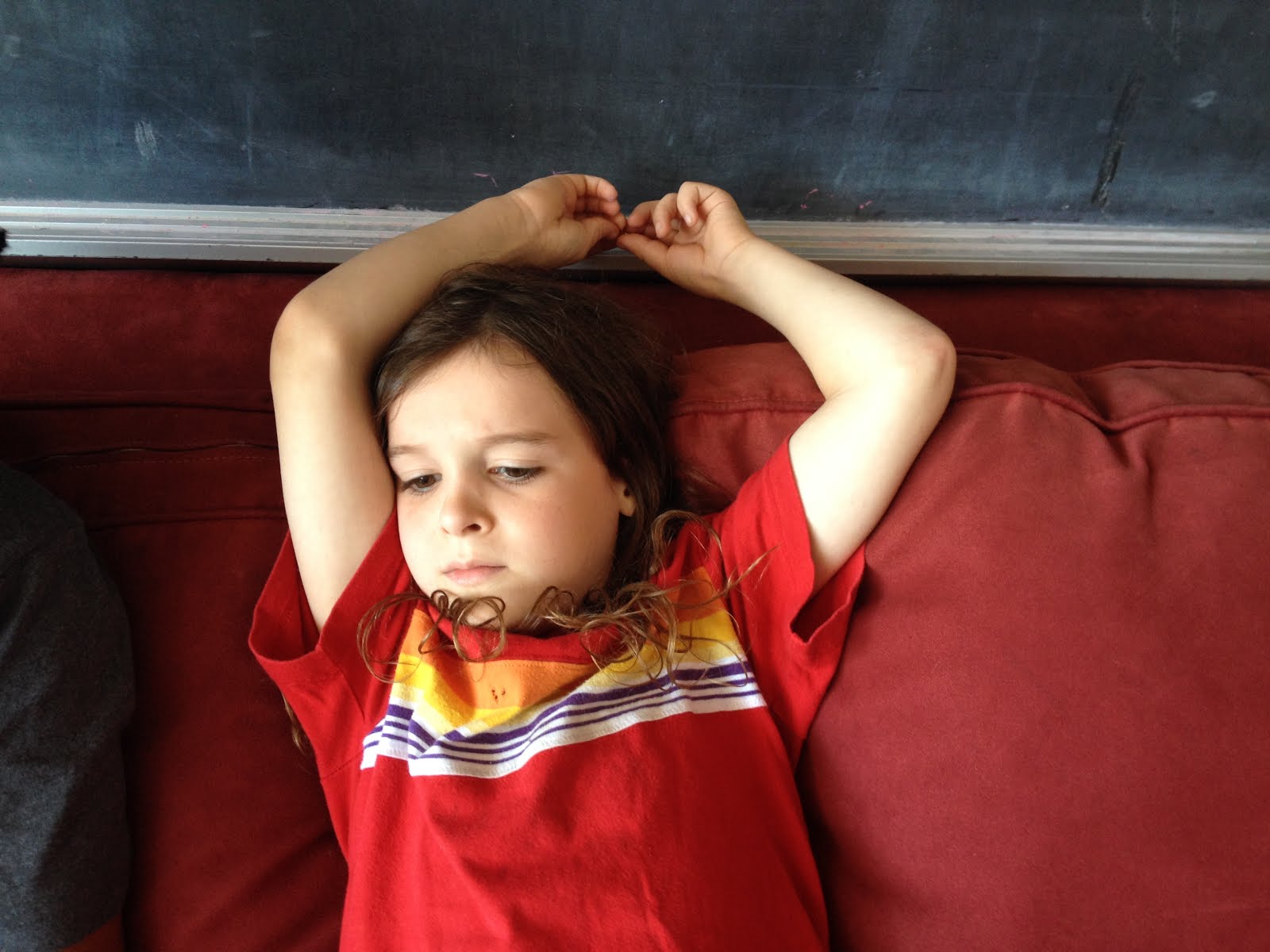

Bored Oz.jpgNo one enjoys boredom. It is an uncomfortable state, leaving one to cast about for relief. If you Google "boredom" and "school," you will find numerous entries about the boredom "epidemic" in our schools and oodles of "boredom-busting strategies" to eradicate this outbreak.  The essence of these cures is to "surround them with wonder"-- make schooling more entertaining so that kids will stop fidgeting and absorb what the teacher is saying.

Examining the “boredom epidemic” in schools and its supposed remedies, it appears that both students and policymakers believe that the curriculum is to blame for the mind-numbing ennui. Nikhil Goyal, teen author and lecturer, explains, “When I was really young, I adored reading… However, I have never enjoyed any of the books I have read in school. None. The dullness of some of the books I have been assigned by my teachers has drained the life out of me and my peers.” With the curriculum to blame, it is natural for a student to resent it and spend energy ignoring or subverting it at every turn.  The number and variety of ways that students do so is, ironically, an impressive display of their ingenuity.
I want more »
Tuesday, 26 February 2013

6 Principals of Secondary Education


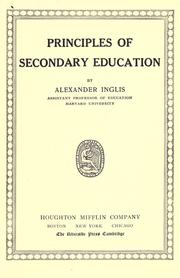
Cover of: Principles of secondary education by Inglis, Alexander James
Alexander Inglis's 1918 book, Principles of Secondary Education  makes it clear that compulsory schooling in America was intended to be what it had been for Prussia in the 1820s. John Taylor Gatto explains that the work of Inglis's, who was a Harvard professor with a Teachers College Ph.D., positions school as a fifth column into the burgeoning democratic movement that threatened to give the peasants and the proletarians a voice at the bargaining table. Modern, industrialized, compulsory schooling was to make a sort of surgical incision into the prospective unity of these underclasses. Divide children by subject, by age-grading, by constant rankings on tests, and by many other more subtle means, and it was unlikely that the ignorant mass of mankind, separated in childhood, would ever reintegrate into a dangerous whole. 

In his essay Against School and book The Underground History of American Education, Gatto explains the six basic functions of school outlined by Inglis.
I want more »

Saturday, 8 December 2012

Classes a la carte - I like this!

According to a recent article in Reuters, my former boss John White is disrupting traditional schooling with a model that I like because it puts students first and gives them MANY more choices and flexibility beyond the traditional walls of the school or classroom where so many students are currently trapped today.  The model is being implemented in a handful of states and allows students to build a custom curriculum by selecting from hundreds (now, maybe thousands later) of classes offered by public institutions and private vendors as long as they take just one class at their local school.  

Students, for instance, could study Russian with an online private tutor, business in a local entrepreneur's living room, geology at a college, Suzuki violin from a certified studio, construction with opportunities developed by their workers' union, physical education by playing on the neighboring school's basketball team or in a community youth sports program, and SAT prep with a national firm like Kaplan - with taxpayers picking up the tab for it.

The naysayers are fearful. 

I want more »